The Odyssey Is a Myth, Not a Documentary
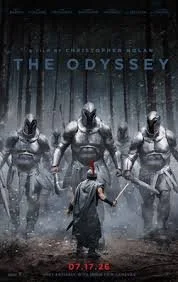
I had planned a different blog post for this month, but when I heard the discourse around the word ‘dad’ in Christopher Nolan’s The Odyssey, I knew I had to weigh in.
People weren’t arguing over the accuracy of the cyclops, or the goddess Athena intervening in human affairs. Not the prophetic visions, the enchantress Circe or the journey to the underworld. The controversy was that a Bronze Age Greek hero would not have called someone “dad”.
At that point I found myself thinking similarly to actor Tom Holland: a Bronze Age Greek would not have said “father” either. He would have spoken ancient Greek. The moment a film is made in modern English, historical linguistic authenticity has already been abandoned for the sake of storytelling.
And that, I think, is where this whole debate has gone wrong. The Odyssey is not a historical chronicle carelessly distorted by Hollywood. It is a mythic narrative filled with gods, monsters, magic and divine intervention. Complaining that such a story is not historically accurate is like complaining that Dumbledore’s cloak in Harry Potter was all wrong for the time period.
I think the more interesting question here is not whether the film is ‘authentic’; it is what audiences come to believe about ancient Greece after watching a modern adaptation of a myth.
As a social and cultural historian, that is the point that interests me. From King Arthur to Titanic, popular culture has always blurred the boundary between history, legend and public memory. In this post I want to explore why debates about ‘accuracy’ often miss the point, and why the real historical issue is how mythic films shape our collective imagination of the past.
The Accuracy of The Odyssey
Before we start criticising Hollywood for changing The Odyssey, we need to remember one important thing: the stories within The Odyssey have been changing for centuries and Homer was never writing a documentary.
The epic poem was likely first composed around the 8th or 7th century BC, and by mid-6th century BC it had become part of the Greek literary canon. Yet the story itself had already existed for centuries as part of an oral tradition, passed down through generations of performers and storytellers. These were not fixed texts carefully preserved word-for-word; they were living stories, adapted and reshaped each time they were told. Much like the 2017 Emily Wilson translation that Christopher Nolan’s film is actually based on.
The very nature of The Odyssey’s creation tells us that historical accuracy was never an integral part of the concept. Details, characters and events likely changed from one telling to the next as generations added their own interpretations. The Odyssey is not a historical account that was later corrupted by a film-studio; it is a mythological ever-changing narrative from the beginning. Again, criticising it for containing inaccuracies or mythical elements is like criticising a bedtime story for not being a newspaper report.
Odysseus himself is a perfect example. He is a legendary figure, and scholars remain divided over whether any of the locations he visits actually correspond to real places. Researchers, including Elizabeth Della Zazzera, have attempted to map his journey, but even those efforts acknowledge that the route contains too many mythical elements to be treated as a historical voyage. Odysseus may preserve distant memories of real elite warriors from the Bronze Age, but we cannot identify him as a historical individual.
Even the Trojan War itself sits at the complicated intersection between historical memory and mythology. Archaeological excavations at Hisarlik in modern-day Turkey (although some of the earliest excavations were highly destructive by modern standards) confirmed that a city we associate with Troy did exist. Archaeologists uncovered multiple settlements built on top of one another over thousands of years, including an important city that was destroyed around the period of Homer’s writings. This could have been Troy, but this discovery does not prove Homer’s story. It proves that the setting was not entirely invented.
The famous Trojan Horse is an even clearer example. I remember being taught about this in primary school, but I don’t recall being told its mythical origins. In fact, I’m sure a lot of people don’t realise that most historians don’t consider it a literal historical event at all. Instead, it is often interpreted as a later literary invention, a metaphor or perhaps a distorted memory of siege technology. The city was real. Conflict in the region was real. But Achilles, Helen, the gods and the wooden horse belong to the world of legend.
A good way to think about it is that we know the Titanic disaster happened. But we also know that Jack and Rose did not.
So why, then, are viewers of Nolan’s The Odyssey becoming so concerned about historical accuracy when so much of the story itself exists somewhere between memory and myth? The answer is simple: because the film is set in Ancient Greece, and Ancient Greece certainly did exist.
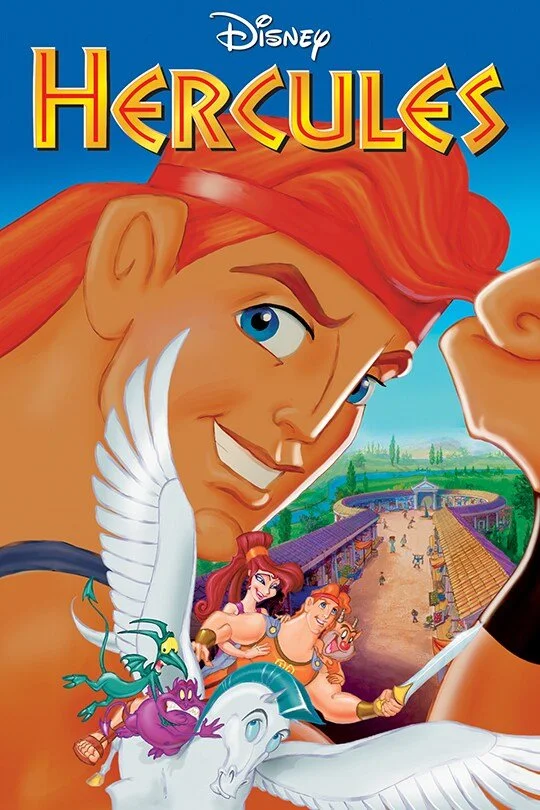
It’s a world that feels familiar. We have been surrounded for centuries by images of it: from Troy, Clash of the Titans, Hercules and Jason and the Argonauts, to countless novels, television series and video games. Over time, these repeated images have created a shared public memory of the ancient world, one where it becomes difficult to separate the historical from the mythical. Historical being bronze weapons, palace cultures and political rivalries. Mythical being monsters, magical transformations and divine intervention. The challenge is understanding where one ends and the other begins.
The Concept of Arthurian Legend
We’ve seen this before; Ancient Greece isn’t the only historical world that has a blurred boundary between fact and fiction. We see the same treatment concerning Arthurian England, but the public is much more comfortable accepting this blurred boundary when we talk about King Arthur.
The earliest written references to Arthur appear in the 9th and 10th centuries and these evolved with each telling. There may have been a Romano-British military leader who inspired the earliest Arthur traditions, but he was more likely a military leader than a king. He might even be an amalgamation of several men. Or he could be completely fictional. Unlike Troy, there is no archaeological evidence of Camelot, it’s not even mentioned until the 12th century. Then there’s Merlin, Excalibur, The Holy Grail and The Lady of the Lake. All products of centuries of literary invention. Even the round table that tourists flock to see in Winchester’s Great Hall dates from the 13th century, hundreds of years after ‘Arthur’. Despite this, for centuries Arthurian legends have occupied a strange space between history and folklore. Similar to Odysseus, the Arthur we recognise today is a product of centuries of storytelling.
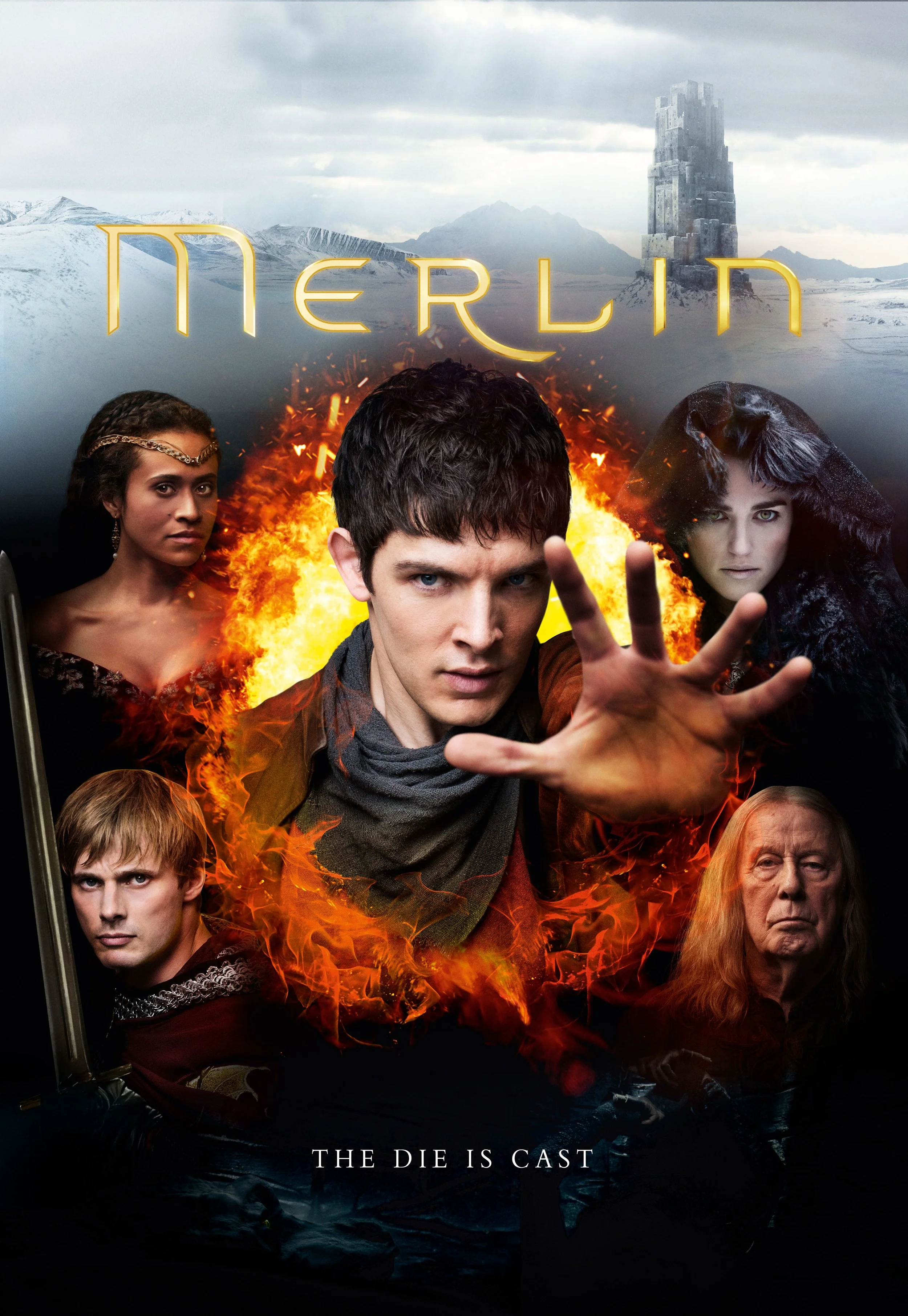
However, we rarely complain that Arthurian films are historically inaccurate because they contain magic. Nobody watches Merlin or Excalibur and argues that the problem is the existence of enchanted swords or prophetic wizards. We understand that these stories belong to the world of legend.
But then something interesting happens. Again, we accept the magic, the prophecies and the enchanted swords, but we still judge the surrounding post-Roman world as if it were historical fact. We question whether the clothing is accurate, whether the castles look right, whether the language sounds authentic and whether the social structure reflects the medieval period.
This is exactly the same challenge faced by adaptations of The Odyssey. Arthurian stories were never intended to function as medieval documentaries. They are legends about an imagined medieval past, stories that reveal as much about the societies that told and retold them as they do about the period they claim to depict. The same is true of Homer; his epics tell us remarkably little about whether Odysseus really existed, but an enormous amount about the values, fears and ideals of the cultures that preserved his story.
Are we not, then, asking the wrong thing of these texts? Would Homer have wanted his epic judged on whether every costume, phrase or palace reflected historical reality? Or would he have wanted audiences to be captivated by the story itself? After all, The Odyssey was never simply entertainment. It’s gods, monsters and impossible journeys were literary devices through which ancient Greeks explored heroism, identity, hospitality, loyalty, cunning and the fragile relationship between mortals and the divine. These plays were the vehicle through which lessons were taught.
So What?
The concern is not that audiences will leave the cinema believing Minotaurs once roamed the Mediterranean or that Athena genuinely intervened in the lives of Bronze Age Greeks. Most people are perfectly capable of separating obvious myth from reality. The concern is far subtler than that. It’s because fiction, especially visual media, has the extraordinary ability to shape public memory, to create images of the past.
When we watch an adaptation of The Odyssey, we absorb far more than its central plot. We notice the clothes the characters wear, the houses they inhabit, the way they speak to one another, the relationships between men and women, the role of religion, the nature of kinship and what everyday life appears to look like. These details become part of our mental picture of Ancient Greece, even when they have been filtered through the imagination of a 21st century filmmaker.
Most people do not study Ancient Greece in any great depth; they encounter it through films, novels, television and video games. Over time, these different versions of the past begin to merge together. Bronze Age warriors stand alongside Plato, the Parthenon sits comfortably beside the Minotaur and historical figures mingle with mythical beasts. Historians sometimes talk about the dangers of ‘flattening’ the past, where centuries of political, social and cultural change are compressed into a single, recognisable brand. ‘Ancient Greece’ stops being a historical period and becomes a thematic box into which everything Greek is placed, regardless of whether it belongs to 1200BC or 400BC. Popular culture reinforces this process. There’s nothing inherently wrong with this, as again most are works of fiction, but it does mean our collective image of the ancient world is often a cultural construction rather than a historical one.
Conclusion
None of this is to suggest that historical accuracy does not matter. It matters enormously. The point is that different kinds of stories require different kinds of historical questions. The mistake is assuming that every story set in the past is trying to recreate the past, rather than simply using the past as a setting. A drama about Queen Elizabeth II, Napoleon or Winston Churchill for example, deals with documented individuals whose lives can be tested against letters, official records and eyewitness accounts. Historians are therefore right to ask how responsibly those people are represented. But The Odyssey, the Arthurian legends or Beowulf belong to a different category altogether. These are stories rooted in cultural memory rather than documentary history, and therefore deserve to be treated as such.
So, if you’re going to see The Odyssey, watch it for what it is: an epic fictional story set in ancient times full of gods, monsters and magic. Think about the myths and legends that have survived for thousands of years, all leading up to this film’s interpretation. And please don’t think about the accuracy of the costumes or the language.
Love this topic and want to explore more?
Things to look up:
The concept of invented traditions by Eric Hobsbawm
The Hisarlık excavations
Pseudoarchaeology – Atlantis, Aliens and Ancient Civilisations
The Elgin Marbles debate
The Horned Viking helmet and controversy over "Viking" imagery
Watch:
The Odyssey (2026)
300 (2006)
Hercules (1997)
Clash of the Titans (2010)
Merlin (2008)
Troy (2004)
Read:
SPQR: A History of Ancient Rome by Mary Beard
Theories, models, and concepts in ancient history by Neville Morley
The Past is a Foreign Country by David Lowenthal
The Archaeology of Ancient Greece by James Whitley
Bonus Question to Think About!
What counts as historical evidence and when does a fictional character become historically significant?