The History of Romantic Archetypes: From Lord Byron to the Manosphere
While watching the new ‘Louis Theroux Interviews’ documentary on the so-called ‘Manosphere,’ I found myself – unsurprisingly- utterly repulsed by some of the men on screen. Yet no matter how objectionable their views seemed, they were constantly shown surrounded by women: collecting phone numbers in the street or appearing in videos with women hanging from their arms.
As a cultural historian, this contrast immediately got me thinking. Why does Cathy cling so fiercely to Heathcliff in Wuthering Heights? Why does Elizabeth Bennet find herself increasingly drawn to the brooding Mr. Darcy in Pride and Prejudice? In both cases, the attraction seems puzzling at first glance. What exactly is the appeal?
Attraction often feels deeply personal; an instinct, a spark, or simply a matter of taste. Yet history suggests something far more complicated. What societies consider desirable has rarely been left to chance. Across centuries of storytelling, film, literature, and popular culture, people have repeatedly been shown what they are supposed to want: the wholesome partner, the dangerous seducer, the rebellious lover, the brooding outsider.
In modern culture, these ideas take familiar, almost ‘Carl Jung’-ian forms. Women are often divided between the dependable ‘girl next door,’ representing safety and respectability, and the seductive ‘femme fatale,’ who embodies power and danger. Young men are cast as the charmingly reckless ‘bad boy’ who promises excitement, or the morally ambiguous anti-hero whose appeal lies precisely in his refusal to follow the rules. These archetypes appear so frequently in culture that they begin to feel natural, as if they simply reflect what people find attractive. To paraphrase King Charles “whatever ‘attractive’ means”.
Yet these archetypes were never neutral. They emerged in specific historical moments, shaped by anxieties about gender, power, and morality. More importantly, they were often used to monitor or guide behaviour: encouraging people to admire certain traits, distrust others, and even shape themselves accordingly. In other words, culture has long attempted to influence not only what we see as beautiful, but who - and what - we believe we should desire.
So let’s look at some examples, and ask a broader question: if culture has been quietly shaping our ideas of attraction for centuries, why does that matter now?
The Femme Fatale
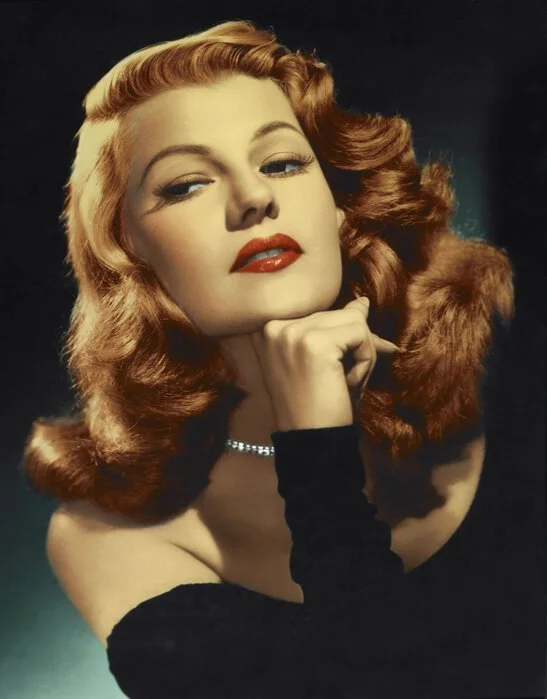
"I'm going to do exactly what I please, when I please." Rita Hayworth’s character Gilda declares defiantly, standing statuesque in a backless black gown. The ‘femme fatale’ is a recurring figure in history, cinema and literature, particularly associated with film noir. Designed to generate tension and propel the narrative, she functions as a dangerous foil to the male protagonist, drawing him into moral compromise or destruction through charm, manipulation, and sexual allure. These characters are typically portrayed as mysterious and emotionally guarded, their power expressed through calculated seduction and an aura of unattainable glamour. Rita Hayworth’s portrayal of Gilda in the film ‘Gilda’ remains one of the most iconic examples of the archetype.
The figure, however, has much deeper cultural roots. Throughout history, powerful or disruptive women have frequently been framed through similar imagery. Figures such as Cleopatra, Mata Hari, and the biblical Delilah were often depicted as seductive manipulators whose beauty and cunning could lead honourable men astray. The cinematic ‘femme fatale’ also overlaps with the earlier cultural trope of the ‘Vamp,’ popular in the late nineteenth and early twentieth centuries. This figure emerged alongside anxieties surrounding the rise of the ‘New Woman,’ who sought greater education political rights, and economic independence. As a result, the ‘vamp’ came to symbolise cultural fears of a woman who rejected traditional domestic roles and motherhood, embodying a form of femininity that appeared alluring yet fundamentally destabilising. This was mirrored in the 1980s/90s when divorce rates were rising, women were entering high-status careers and 2nd wave feminism led to a sexual revolution which many found dangerous.
“Isn’t She A Total Betty?”: The ‘Girl Next Door’
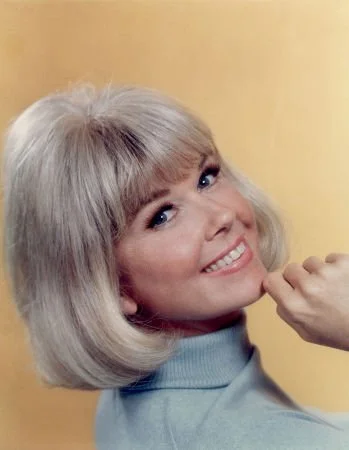
Unlike the dangerous ‘femme fatale’ of film noir, whose power often led men to ruin, the ‘girl next door’ figure was designed to feel reassuring. These characters were usually portrayed as capable and spirited, but never embittered by society or openly antagonistic towards men. They were approachable, wholesome, and fundamentally ‘safe’ choices. Few figures embodied this archetype more clearly than Doris Day. Day became one of the defining examples of the ‘girl next door’ persona in mid-twentieth-century American culture. Her screen presence was carefully cultivated: approachable, naturally beautiful, down-to-earth, and trustworthy rather than glamorous or unattainable.
The popularity of this image was no coincidence. In the years following World War II, Hollywood played an important role in promoting a ‘safe’ vision of womanhood. The war had disrupted traditional gender roles with millions of women entering the workforce. When peace returned, there was widespread cultural anxiety about restoring a sense of normality. Films increasingly reassured audiences that women’s independence did not threaten the stability of the home.
Historically, these archetypes rarely appeared in isolation. Instead, they were often framed as deliberate cultural pairing. The dynamic between Elizabeth II and Princess Margaret, for instance, was frequently presented as a clash between the dutiful, responsible elder sister and the glamorous, rebellious younger one. A similar contrast appears in the long-running Archie Comics, where Betty Cooper and Veronica Lodge embody the same cultural divide. These comparisons appear constantly throughout history and media once you know to spot them: Helen Parr vs Mirage, Lilith vs Eve, Mary Jane Watson vs Felicia Hardy, Audrey Hepburn vs Bridgette Bardot.
In each case, the archetypes serve a similar purpose: they offer audiences a simple moral contrast between the ‘good’ woman and the ‘dangerous’ one, quietly reinforcing ideas about which traits should be admired – and which should be feared.
For more examples of the ‘Femme Fatale’ and ‘Girl Next Door’ in history and culture, and the reasons behind these, see the bottom of this post.
Why does this matter?
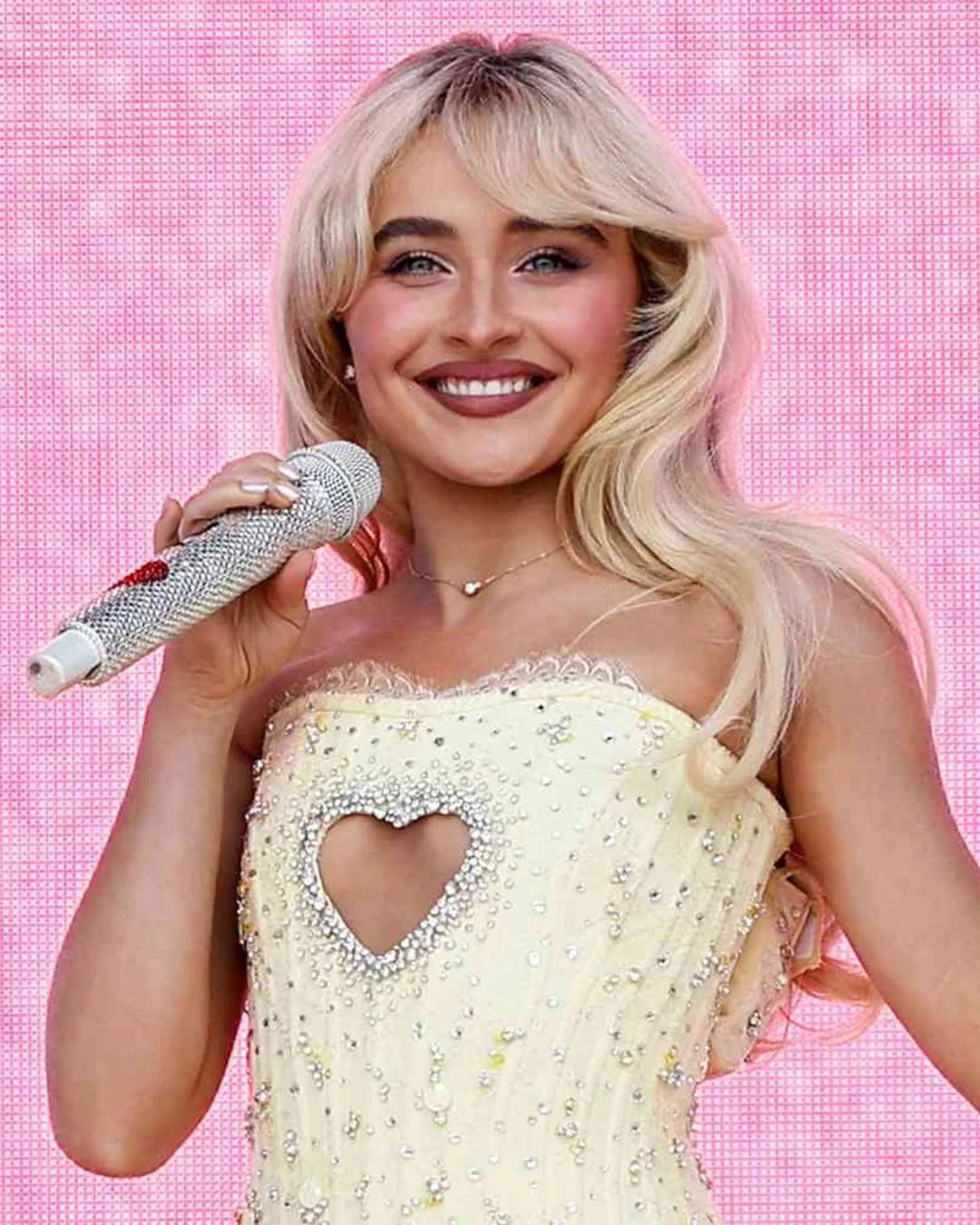
Bringing the discussion to the present day, it is particularly interesting to examine contemporary figures who appear to embody both archetypes simultaneously, complicating the traditional opposition between them. In recent years, Sabrina Carpenter has frequently appeared in debates about modern expressions of femininity. Her public image draws on elements of both the ‘girl next door’ and the ‘femme fatale’. On one hand, her soft, dewy makeup, petite stature, and bouncy blonde hair evoke the familiar, approachable innocence associated with the ‘girl next door’ archetype, not unlike the character of Betty Cooper. On the other hand, her performances often adopt the stylings of the ‘femme fatale’, featuring vintage-inspired catsuits, lingerie aesthetics, and knowingly suggestive lyrics. Her music videos frequently reinforce this duality, often depicting male love interests who meet ironic or theatrical ends.
For many audiences, Carpenter represents a form of ‘good feminism’: an artist who appears to reclaim traditionally sexualised imagery while presenting it with humour, self-awareness, and a sense of control, framing her performances as something done ‘for the girls’ rather than for the male gaze. Yet this raises a more complex question. Is this reclamation genuinely subversive, or does it still operate within a framework shaped by patriarchal expectations? In other words, are audiences responding to an authentic expression of female desire and artistic identity, or to a figure who conveniently satisfies both archetypes that have historically appealed to men?
A similar tension can be seen in recent online discourse surrounding the so-called ‘Pink Theory’ trend on social media. In this trend, women who previously rejected traditionally feminine symbols (such as the colour pink) in favour of more neutral or ‘serious’ aesthetics in order to be taken seriously, begin to embrace them again. For some, this shift is framed as a form of personal healing and self-acceptance: a reclaiming of femininity after years of distancing themselves from it. Yet, as with the re-emergence of the discussed archetypes, it also raises questions about whether this return to femininity represents genuine liberation, or a renewed negotiation with longstanding cultural expectations of how women should appear or behave.
A Rebel Without A Cause: The ‘Bad Boy’ Obsession
In the 1986 film ‘Pretty in Pink’, the ending had to be completely refilmed after disastrous test screenings. In the original version, Andie chose the loyal Duckie and audiences hated it. They overwhelmingly preferred the aloof, rich boy Blane. The studio even had to bring actor Andrew McCarthy back to reshoot the final scene, wearing a wig because he had already shaved his head for another role. The reaction revealed something powerful: audiences wanted the ‘bad boy’ to win.
This fascination with rebellious, emotionally distant men appears again and again throughout history. From literary anti-heroes to modern ‘alpha male’ archetypes, the ‘bad boy’ tends to surge in popularity during periods of cultural tension: times of social change, economic uncertainty, or shifting gender roles. Though the details vary, the archetype usually shares the same traits: ruggedness, moral ambiguity, and a defiance of authority.
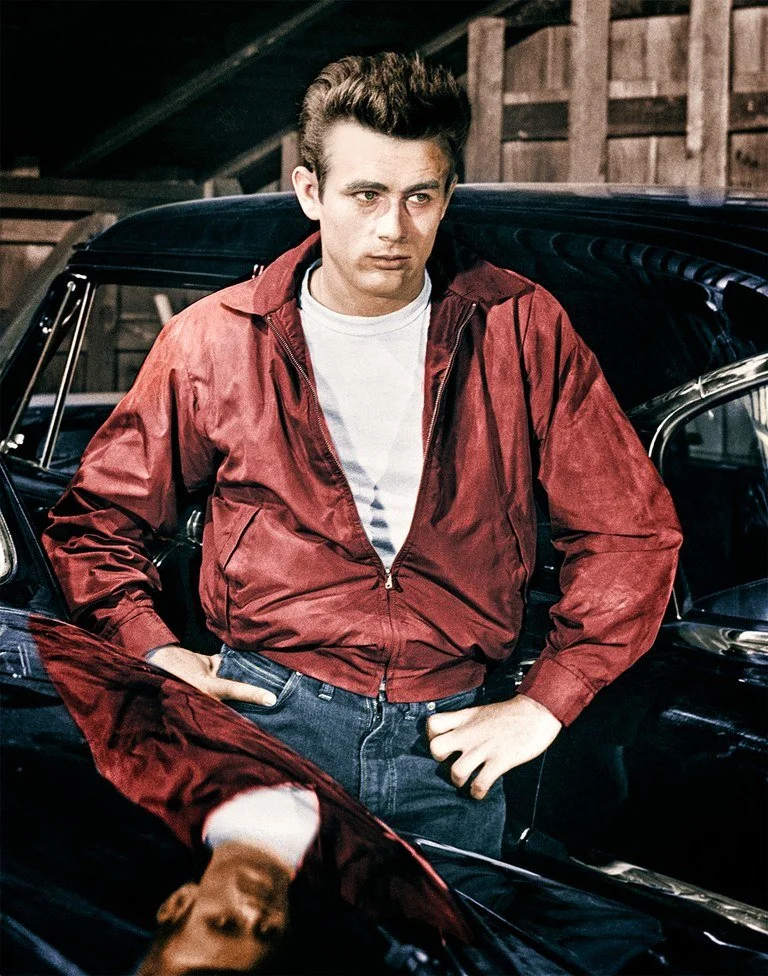
Across history, three recurring forces help explain why the ‘bad boy’ keeps returning. Firstly, rebellion against conformity. One of the clearest examples appears in the post-war ‘Rebel Without a Cause’, starring James Dean. Released during the rigid suburban conformity of the 1950s, Dean’s character embodied a new kind of rebellion. He wasn’t a criminal outsider, he was a ‘bad boy from a good family.’ This emerged as a response to suburban ennui. When society feels too constrained, the ‘bad boy’ acts as a ‘liberator’ questioning established norms and authority figures. The film resonated with a generation of teenagers who felt trapped between traditional expectations and emerging countercultural ideas.
Earlier versions of this rebellious archetype appear in the Romantic era. Figures like Lord Byron and the brooding Heathcliff from ‘Wuthering Heights’ captured a similar cultural mood. The Romantic movement itself was a reaction against the cold rationalism of the Industrial Revolution. In a world governed by propriety, inheritance, and arranged marriages, these men represented raw emotion, intensity and passion. For women – especially those confined to rigid social roles – they offered an escape from suffocating respectability. In these cases, the ‘bad boy’ functioned as a symbolic challenger to the dominant norms of the time.
“Well, yeah. That's why I'm here, ya know? To change.”: The ‘I Can Fix Him’ Trap
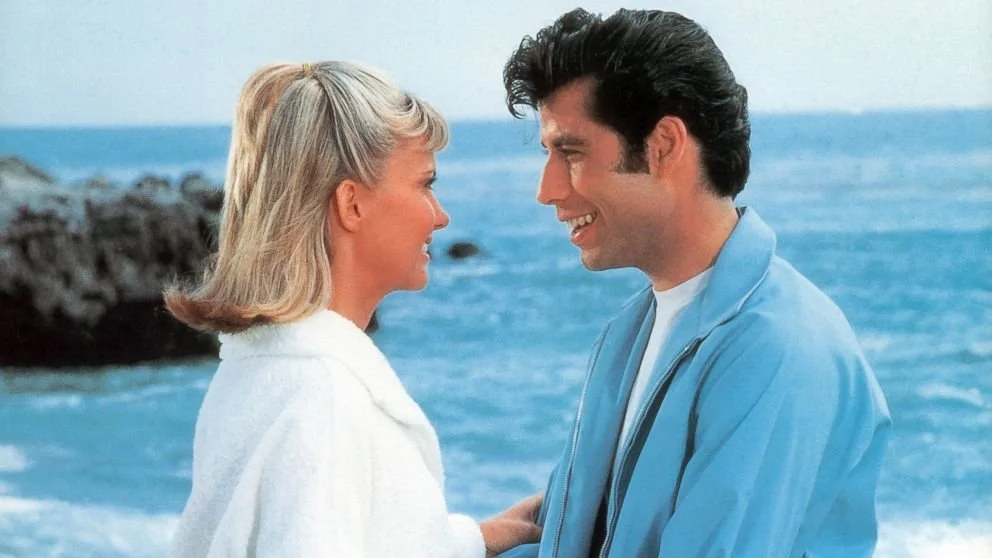
Secondly, ‘bad boys’ can be seen as a safe rebellion and form of escapism. The film ‘Grease’ is a perfect example. Released in the late 1970s, it nostalgically reimagined the 1950s greaser culture through the character of Danny Zuko. By the time the film had arrived, audiences had already lived through the turbulence of the 1960s: Vietnam protests, sexual revolution, civil rights struggles, and the political fallout of the Watergate scandal. Real-life rebellion had become heavy and political. Danny Zuko offered a far safer version, he had the leather jacket and the hair, but he was ultimately a softie who just wanted to win the girl. His ‘badness’ was rebellion without the consequences.
Characters like Danny Zuko and Johnny Castle often acted as catalysts for female transformation, helping protagonists break out of socially imposed restraint as more women in the 1980s entered the workforce and found their voice. The popularity of these films suggests that women in the 1980s were using these stories to figure out how to be bold in their own lives.
Finally, perhaps the most enduring appeal of the ‘bad boy’ lies in the promise of redemption, the ‘I Can Fix Him’ archetype. Often popular with younger female audiences, this narrative appears repeatedly across literature and film: an emotionally distant or difficult man whose ‘badness’ can be redeemed through love. Characters like Bender in The Breakfast Club or Blane in Pretty in Pink reflect this pattern. The classic blueprint, is of course Mr Darcy from Pride and Prejudice. He isn’t a criminal rebel, but he embodies the same emotional structure: proud, aloof, and unpleasant to most. Over the course of the novel, he changes his worldview and behaviour because of his love for Elizabeth. These characters offer the ultimate female power fantasy: the ability to ‘tame’ the most powerful, unapproachable man in the room.
The Common Thread: “The Exception”
Across all these stories, from Romantic poetry to Hollywood films, the same psychological pattern appears. The ‘bad boy’ is difficult, rebellious, or emotionally unavailable to everyone else. But with the heroine, he is different as she is the exception. Historically, this dynamic carried particular emotional weight in societies where women had limited agency or independence. If a man who rejected everyone else chose you, it validated your worth in a world that often offered women little recognition or power.
Conclusion
The enduring appeal of archetypes such as the ‘femme fatale’, the ‘girl next door’, and the ‘bad boy’ lies in the way they embody deep-rooted cultural fantasies about danger, safety, power and transformation. The ‘femme fatale’ captivates audiences through her seductive power and moral ambiguity, creating dramatic tension by tempting otherwise rational men to abandon their principles. Traditionally contrasted with the ‘girl next door’ who represents warmth, stability, and domestic security, the ‘femme fatale’ reflects historical anxieties about female independence while also allowing audiences to engage with transgressive sexuality in a controlled narrative that often restores moral order. Meanwhile, the ‘bad boy’ archetype reflects a different kind of fantasy, particularly for women. Historically, figures like Mr Darcy or Heathcliff symbolised the possibility of gaining influence in a society where women lacked legal and financial power: ‘taming’ a rebellious man promised status and emotional victory. Although women today hold far greater autonomy, the cultural narrative of the redeemable or fixable man still persists, as seen in modern stories like Elle Evans’ attraction to Noah Flynn in The Kissing Booth.
Ultimately, these archetypes remain popular because they dramatise fundamental romantic tensions: danger versus security, rebellion versus stability, and the fantasy of transformation. Even as modern media begins to subvert them, such as with more redeemable versions of the ‘femme fatale’ like Black Widow, their core appeal endures because they tap into long-standing social histories and psychological desires that continue to shape how audiences imagine love, power and identity.

So What?
Looking at the history of romantic archetypes is important because it reveals how culture has shaped what we find desirable. When we recognise that figures like the ‘femme fatale’, the ‘girl next door’, and the ‘bad boy’ are not timeless truths but historically constructed roles, we gain the ability to question whether the people we admire, and the identities we perform, are genuinely our own choices. In this sense, studying these archetypes through an applied history lens gives us agency. It allows us to enjoy the ‘bad boy’ in a novel or film as a cultural artefact without feeling compelled to seek one out in real life.
Historical perspective also helps us understand how archetypes evolve in response to social anxieties. The rebellious romantic heroes of the nineteenth century, such as those created by Lord Byron or the brooding figures in the works of Emily Bronte, reflected tensions within a rigid moral society. Later cultural icons like James Dean embodied mid-twentieth century rebellion against conformity. Today, however, a new version of the ‘bad boy’ has emerged within online spaces often associated with the so-called ‘manosphere’. Influencers such as Andrew Tate perform an exaggerated form of masculinity centred on wealth, dominance, emotional detachment, and visible status symbols. Unlike earlier rebellious archetypes, this persona is often less about resisting social injustice and more about branding and profit.
Recognising this performance is crucial. When audiences admire these figures, the attraction is often directed not at the individual themselves but at the status and power they claim to represent. Understanding the historical lineage of archetypes makes it easier to see that this ‘alpha male’ identity is frequently a calculated persona designed for attention, influence, and monetisation rather than a mysterious or authentic personality.
The historical awareness also clarifies why some modern relationship dynamics can become unhealthy. ‘Manosphere’ content often encourages men to suppress emotion on the assumption that vulnerability lowers their status with women. At the same time, many women have been culturally conditioned by centuries of storytelling to believe that their value lies in being the exception, the one person capable of reaching a guarded man’s hidden goodness. When these narratives collide, it can create a situation where women try to ‘heal’ a man who is actively performing emotional distance as part of an adopted identity.
History therefore provides a useful distinction between genuine rebellion and simple toxicity. Romantic rebels, from the Byronic hero to mid-century cultural icons, were typically defined by their opposition to restrictive social systems. In contrast, many modern ‘toxic’ personas are rebellious not against injustice but against basic respect, empathy and boundaries. Understanding this difference helps audiences recognise when someone is simply using a familiar archetype to excuse poor behaviour.
Ultimately, applying historical insight to modern culture helps dismantle the illusion that these roles are natural or inevitable. For more than two centuries, media has told women that their worth lies in being the girl who can redeem the troubled man or perfectly embody an idealised archetype. Recognising this as a recurring literary and cultural trope – rather than a reflection of reality – makes it easier to step back from those expectations. The value of studying these archetypes, then, is not simply academic. It is practical: by understanding the past narratives that shape desire, individuals are better equipped to recognise manipulative performances, challenge outdated romantic myths, and make more conscious choices about the relationships they pursue.
Love this topic and want to explore more?
Things to look up:
· The Marketing of Jackie Kennedy
· Penny from the Big Bang Theory as the literal ‘Girl Next Door’
· National Geographic’s portrayal of Jane Goodall
· NASA’s Marketing of Sally Ride
· ‘Girls Next Door’ – Donna Reed, Judy Garland, Meg Ryan
Watch:
· Black Widow (2021)
· Fatal Attraction (1987)
· Basic Instinct (1992)
· Rebel Without a Cause (1955)
· Cool Hand Luke (1967)
· The Wild One (1953)
· Gilda (1946)
· On Moonlight Bay (1951)
· Louis Theroux: Inside the Manosphere (2026)
Read:
· The Films of John Hughes by Timothy Shary
· Rethinking the Hollywood Teen Movie: Gender, Genre and Identity by Frances Smith
· Bandits by E.J Hobsbawm
· Heavenly Bodies: Film Stars and Society by Richard Dyer
· Pride and Prejudice by Jane Austen
· Wuthering Heights by Emily Bronte
Bonus Question to Think About!
Why do so many people fall in love with fictional characters, and has that actually increased, or are we just noticing it more now?